
Chronicles of Fighting Against the Epidemic 2020:Spring Breeze and Wildfire,History Always Repeat Itself
“Time flies! It’s been three months already,” recalling the medical supply donation action that he participated in during the early days of the lockdown in Wuhan, Xiaoye couldn’t help but sigh at the ruthlessness of time. “To be honest, I don’t even remember what I was doing on Chinese New Year’s Eve anymore, because it was non-stop work around the clock during that time.”
“The most needed items during the Spring Festival were (protective) medical supplies, followed by logistics resources, and donations were actually the most abundant. I noticed this problem as soon as I joined the group. So, I first searched for intercity and international logistics resources through various channels to help alumni who had found sources of goods solve their logistics problems. After all, alumni have a certain level of trust and are easy to do background checks on, which is better than strangers met online,” Xiaoye said. He has 20 years of work experience and always likes to summarize his work habits. The group he mentioned refers to a WeChat group organized by a group of alumni to assist Wuhan hospitals. Xiaoye is one of the donors.
He said, ”The logistics experts who were finally confirmed were recommended by friends who knew and trusted them. I don’t trust resources recommended by people I don’t know or haven’t dealt with. It’s not just about being enthusiastic, it’s harder to spend money than to make money. To spend money well and get things done, you have to carefully choose your partners, and that’s always the case.”
If it were you, you would do the same
Actually, Xiaoye’s sense of crisis was not initially so strong. At first, he saw the same information online as most people. As more and more requests for help from hospitals and doctors were transmitted in the WeChat group, he began to donate money. “At first, it was just a donation following the crowd. I have been doing public welfare work in my spare time for more than ten years, and donating and participating in volunteer work is just a habit. The money I donated was not much, just a gesture. I wanted to do something within my ability. At that time, although the news said that experts had confirmed that the new coronavirus was definitely “human-to-human” transmission, I did not realize that the situation was much more serious than I had imagined.”
During the Spring Festival, workers returned home and factories stopped production, leading to a shortage of medical consumables. People in the WeChat group often asked for help, from donating sources of goods, transportation, finding doctors to assist in confirming product standards, and finally receiving them. Xiaoye actively and enthusiastically helped to find resources and connect information from all parties. Slowly, the scope of his work became deeper and wider. He said that buying goods was like going to war. Once the source of goods was confirmed, he had to immediately find reliable friends who could go to the site to inspect and pick up the goods, coordinate tense transportation resources, prepare funds, contact the receiving hospitals, and confirm the allocation quantity of each hospital from start to finish. For one order, he sat in front of his computer in his study for 12 hours to coordinate and plan, only drinking a sip of water and taking a bite of food. “Fortunately, my little buddies were very powerful, and we worked together to get things done.” Xiaoye seemed to be back in that situation, sighing heavily.
“If I hadn’t called the frontline nurses in the hospital to confirm the situation of receiving supplies, I wouldn’t have felt so deeply and angrily about what happened in Wuhan thousands of miles away. I remember it was evening, and there was no one on the large lawn outside the study window. I put down the phone and cried alone in the room with grief and anger.” Xiaoye then called the contact number on the official website of the Red Cross Society of Hubei Province to question the distribution of medical donation supplies. However, at that time, the website of the Red Cross Society of the province only published the total amount of donations received and the total value of supplies, without details of the supplies and distribution information.”
“I sternly questioned them about what supplies they had received, whether they had distributed masks and protective clothing to hospitals, and whether they knew that hospitals no longer had these supplies. The staff who answered the phone didn’t know anything, and their bureaucratic habits made me furious. Looking back now, the reason for my anger is also difficult to describe in words. Two sentences come to mind: ‘When the city gate is on fire, the fish in the moat are affected,’ and ‘When the rich feast in their mansions, the frozen bones of the poor lie on the road.’ Later, some people analyzed that it was a problem with the ability of government-run charity organizations, which may have some truth. But in that situation, I think it was caused by bureaucratic inertia. I have always supported accountability. But accountability is not the ultimate goal, it is to promote reflection through accountability, and to find and solve the root causes of problems. Now everyone talks about ‘normalizing epidemic prevention.’ I understand that ‘normalizing’ means learning from painful lessons and changing the way we work, communicate information, and provide feedback.”
JM curiously asked Xiaoye: “What did the nurse who answered the phone tell you?”
“Actually, she just told me in a very ordinary tone, ‘The hospital director doesn’t allow us to wear donated protective clothing, saying it doesn’t meet the hospital’s standards. Tomorrow, we may not even be allowed to bring masks.’ I was very surprised at the time and asked how they planned to protect themselves without masks. She still spoke in a calm tone and said, ‘I don’t know, several people in the neighboring department have already fallen ill.’”
“How did these words make you burst into tears?”
“This is like sending soldiers to the battlefield without giving them guns and bullets. You are urgently preparing supplies in the rear, striving to send them to the front line as soon as possible, but when you get there, you find that the front-line leaders do not allow their use. If you were in his shoes, you would feel the same sadness and indignation upon hearing such a thing.”
“What impact did this have on you?”
“My perspective on observing events has changed. At that time, I realized that most hospital managers were not on the front line of the fight against the epidemic, so they could ignore the situation of front-line medical staff and forget basic common sense, only following the original administrative management regulations and rules, and few had the ability to handle crisis events or take responsibility. Once people become machines of the system, they lose the ability to think. In this context, I was somewhat pessimistic about controlling the epidemic at that time, and when I thought about the subsequent impact on the economy, my sense of crisis became even deeper. Therefore, I am more actively involved in donating to public welfare actions on the front line of hospitals.”
“Do you have a sense of mission?”
“Not really. It’s just a sense of crisis – ‘there are no eggs under a toppled nest’.”
“Do your friends around you have the same thoughts and actions as you?”
“Not all of them. Some friends are very active like me, while others are indifferent. I asked a friend who went abroad for the New Year to find a local source of masks, but he told me not to cause trouble for the government and said, ‘China is so powerful, why do you need to donate any supplies?’ ” Xiao Ye replied with a smile.
We are just helping ourselves
It is important to note that medical supplies have strict standards. In order to prevent medical accidents, hospitals have their own procurement standards, strict inventory and distribution processes. Although individuals, legal persons or organizations within the country can all be recipients of donated epidemic prevention materials from overseas, there are two special regulations for donations to Wuhan, Hubei Province:
According to the announcement “Notice on Mobilizing Charitable Forces to Participate in the Prevention and Control of the New Coronavirus Pneumonia Epidemic in an Orderly Manner” issued by the Ministry of Civil Affairs on January 26, 2020, the materials collected by charitable organizations for epidemic prevention and control in Wuhan, Hubei Province can currently only be received by the Red Cross Society of Hubei Province, Hubei Charity Federation, Hubei Youth Development Foundation, Wuhan Charity Federation, and Wuhan Red Cross Society.
According to the content of the “Announcement to the Public by the Wuhan Red Cross Society (No. 6)” issued on January 30, 2020, if the donated materials to the Wuhan Red Cross Society are intended to be donated to a specific medical institution, the donor can directly send the donated materials to the recipient unit after confirming with the medical institution, and complete the donation procedures at the Wuhan Red Cross Society later with the proof of donation to the designated recipient unit.
Among all the recipients mentioned above, only the recipient with official background can enjoy the tax exemption policy for imported materials in accordance with the law. In addition, the Emergency Support Group of the Wuhan New Pneumonia Prevention and Control Command issued the “Announcement on Matters Related to the Purchase or Donation of Epidemic Prevention and Medical Consumables” on January 30, 2020, which detailed the standards and matters related to donated materials. Among them, there are the following regulations for products from overseas medical device manufacturers:
- Those who have obtained the qualification of registration certificate for imported medical equipment products within the country can purchase or donate;
- Those who have not obtained the registration certificate for imported medical equipment products within the country, but meet any of the “foreign standards” in the attachment and can provide the foreign medical device listing certificate and inspection report for the relevant products can purchase or donate, and the products can be directly sent to medical institutions for use after arrival;
- Those who have not obtained the registration certificate for imported medical equipment products within the country, but meet any of the “foreign standards” in the attachment, but cannot provide the foreign medical device listing certificate and inspection report, will be inspected by the emergency support team of the Wuhan New Pneumonia Prevention and Control Command at the site of the goods upon arrival, and if necessary, samples will be sent to inspection agencies for inspection of key indicators. Those that meet the requirements will be sent to medical institutions for use.
For materials that do not meet the above conditions, whether they are purchased or donated, they cannot be used as medical supplies. If there is a special need, the Wuhan City Market Supervision and Administration Bureau will send the product to a qualified inspection agency for inspection in accordance with the “domestic standards” in the attachment before it can be used.
Subsequent facts have shown that even with the tireless efforts of government officials and many local volunteers joining the front line work, there was still a significant shortage of manpower during that special period in Hubei and Wuhan, and the backlog of a huge amount of materials could lead to corruption loopholes. The emergency situation made it very difficult to implement policies effectively. The weighing of priorities and how to make trade-offs tested the wisdom of the implementers and decision-makers.
Xiaoye’s personality is like a fire, and he is also very passionate when it comes to doing things. With the evolution of the situation in Wuhan, Xiaoye’s emotions have been like a roller coaster. For a whole month, Xiaoye has also encountered various people who participated in public welfare actions online.
“Some people always say that our public welfare actions are helping Wuhan and Hubei, but I think this time is different from supporting Wenchuan at that time. We are helping ourselves – helping Wuhan compatriots and supporting frontline medical staff is suppressing the spread of the virus and protecting ourselves.” Xiaoye said. “supporting Wenchuan” that he mentioned refers to grassroots public welfare organizations’ aid action after the 2008 Wenchuan earthquake. Some public welfare figures have called 2008 the “first year of civil public welfare”.”
With the government taking over factories and the National Ministry of Industry and Information Technology coordinating production, the phased mission of civil public welfare has also been completed. “I think this is normal. Civil public welfare is just a supplement to government social governance. The main reason is that institutions such as the Red Cross Society of Hubei Province and Wuhan have weak capabilities and are too inactive,” Xiaoye openly criticized official charitable organizations.
Xiaoye also knew that the donations they made at the time were just a drop in the bucket. JM also saw many individuals and temporary public welfare groups with various backgrounds who took spontaneous actions like them. At the beginning of the anti-epidemic period, they were the first to react and quickly donated urgently needed medical supplies to the front line of hospitals. Apart from JM, it seems that not many people paid attention to them, and there was no official or self-media to publicize and report on them.
Although there were many unsatisfactory aspects of the donation actions, many doctors were still very grateful for the warmth given by these anonymous individuals during the extraordinary period. Xiaoye still keeps many WeChat messages from Wuhan hospital staff in his mobile phone, although they only contain simple words of “thank you”. Although they have never met, recalling the days when they fought together, it feels like a spring breeze blowing over Xiaoye’s heart.
Xiaoye also criticized various phenomena in the anti-epidemic period, and recommended that I read a series of analytical articles written by economist Huasheng on this epidemic. Due to the length of this article, it is not convenient to list them one by one. A sixty-year-old acquaintance of Xiaoye said that he saw a trace of the May Fourth Youth’s passion in Xiaoye. Although it is only a trace, it is still precious. Although this trace of passion is not always easy to ignite in ordinary life, it is still a spark! JM also believes that there are many individuals like Xiaoye around us, and the trickle can gather into the sea, and the spring breeze and wildfire will also ignite.
(At the request of the interviewee, the names used in the article are pseudonyms.)

Picture: “Forty is not confused” (Handmade eternal flower custom product)
Design and production: Chen Feng | Photography: Yolanda Life Aesthetics Studio | Selling price 1500 yuan. Sold out)
Editor’s Note:
During the SARS period, Chai Jing, then a reporter from China Central Television, directly asked an official in an interview why information was concealed and whether it was due to systemic issues. Today, investigative journalists have either left the profession or been detained, and no one remains to personally pursue the truth on the front lines on behalf of the public or to fulfill the people’s right to oversight. Is this not a tragedy?
Should the Chinese people who have not experienced historical events learn from this lesson? Should they begin to reflect on what they have given up, and what legacy these concessions will leave for future generations? Are they and their descendants truly just cold, insignificant numbers in statistical reports?
Translated by ChatGPTm
Edited by Wind
Chen Ya | From ChatGPT to Creative Education
By Chen Ya, Jointing.Media, in Wuhan, 2023-02-24

Schwetzingen 2022
SQM, Jointing.Media
Recently, the online publication “Clarkesworld,” established in 2006, has announced the suspension of submissions without a clear timeline for resuming. The reason behind this decision is straightforward: many authors are employing AI technology to generate their literary works and then submitting them under their own names. This well-renowned magazine, which has been awarded the Hugo Award for Best Semiprozine thrice, has received over 500 unsatisfactory submissions in the last twenty days, accounting for about 38% of the total. Majority of these submissions have AI patterns and form distinct clusters. This has increased the editors’ workload significantly and disrupted the magazine’s regular operation.
The emergence of AI in generating articles, books, and even artwork challenges the assumption that AI cannot replicate human creativity. The rate at which this singularity is approaching seems to be faster than anticipated. In the near future, AI will undoubtedly displace certain jobs, resulting in a “crowding out effect” on particular industries. However, in the longer run, the disappearance of some tasks may coincide with the creation of novel positions.
At present, AI’s creative output is heavily reliant on databases derived from human history. However, when homogeneous works are manufactured on an industrial scale and treated as commodities, their value diminishes proportionally as the quantity increases. It is akin to the difference in worth between an original master’s painting and a photocopy or printed replica. Creativity stems from thought, and if creators intend to keep pace with industrial assembly lines, they must chart a new course. Original thinking is a personalized aspect of human nature that contrasts with batch-made AI products that cannot be quantified or replicated through data analytics at the moment.
Human beings typically acquire new skills by imitating, internalizing, and then mastering them through regular training. Conversely, AI “learns” skills through extensive data-driven training and eventually begins to replace the repetitive tasks performed by certain professionals or researchers. Only a select few individuals manage to break free from convention, innovate, and develop original skills after mastering the ones passed down to them by their predecessors – something that AI is yet to accomplish. Moving towards the age of collective intelligence, however, it is necessary to make significant advances in the field of neuroscience to unlock groundbreaking research findings in AI.
Machines appear to be “smarter” than humans due to their faster computational speed, which is in turn supported by the artificial hardware, software, and integrated systems behind them – at least for now, these systems are “artificial” and therefore theoretically subject to physical limitations. However, if brain-computer interface technology were to become more advanced, humans and AI may eventually operate on the same level of computing power, yielding an uncertain outcome.
Many literary works explore the possibility of AI evolving into a superior species to that of humans. Regarding this, the author chooses to maintain an open mindset. As AI continues to evolve, and if the human brain fails to keep pace, the science fiction narratives of this theme could ultimately become real. The law of the jungle, “survival of the fittest,” is a harsh reality.
Machines currently outperform humans in terms of physical ability, while the cognitive ability of AI remains a topic of scientific debate. However, it remains uncertain whether children will face real threats from AI. Although problem-solving skills can help children obtain access to higher education and prestigious schools, it is unclear if they can avoid being replaced by AI in the workplace. Hence, it is essential for parents to plan ahead for the future.
“Parents’ love for their children prompts them to plan for their long-term future.” In addition to the commonly mentioned cultivation of psychological resilience in the face of setbacks, the learning ability to adapt to changes, and the formation of positive habits for life and studies, how can parents guide their children towards a more creative and innovative lifestyle?
As Mr. Tao Xingzhi once put it, “Life is education.” By starting with daily life, children can cultivate the habit of finding multiple solutions to practical problems, and develop the ability to explore and learn new knowledge around those issues. However, all of this depends on high-quality companionship from parents. During the preschool and primary school years, parents can spend more time helping and supporting their children in discovering their true interests. Moreover, parents can inspire their children by continuing to learn and working hard towards their own interests, becoming a role model for their offspring. These practices are key components of family education.
Nurturing creativity in education calls for more than just time; a conducive space is also necessary. It is essential to create an educational environment that promotes innovation and sparks children’s imaginations both at home and at school, requiring a collaborative effort between parents and educators. Unfortunately, as soon as children enter junior high school, most of them are subject to immense pressure regarding high school entrance exams. Can excessive competition be averted? When parents and educators struggle to reach a consensus on educational values, parents must carefully weigh and make informed choices. Achieving a balance between these sometimes conflicting interests is critical.
Thinking, knowledge, and ability constitute the three integral components of creative education. According to psychology, creativity encompasses the ability to comprehend the essence and internal relationships of objective phenomena, and also to generate original and socially meaningful insights based on this understanding. Creative thinking represents a critical mode of thinking.
As stated in the book “Lifelong Kindergarten,” creativity is inherent in every person, and education must strive to help them unleash their full creative potential to adapt to an ever-evolving world. Only through creativity can children better face an uncertain future.
Author’s bio: Chen Ya, a person living in another world.
Translated by ChatGPTm
Edited by ChatGPT Next
Ralated:
Israel’s Green Pass Policy: A Chronicle of a Tragedy Foretold
【城市】| City
By Shirly Bar-Lev, in Israel, 2022-09-05
Escalation of Commitment refers to decision-makers’ tendency to persist with or even intensify losing courses of action (Sleesman, Lennard, McNamara, Conlon, 2018). In a typical escalation situation, large amounts of resources are initially invested, but despite these expenditures, the project is in danger of failing.
At this point, the decision-maker must decide whether to persist by incurring additional expenses or to abandon by terminating the project, or exploring alternative courses of action (Moser, Wolff, Kraft, 2013). Only at that point, the decision-maker is so invested in the project that he or she is pushed to aggravate the steps taken, and invest further resources.
Escalating commitment to a previous course of action not only traps the decision-makers but pushes them to behave in ways which act against their own self-interest, and that of the people they represent – sometimes with catastrophic consequences (Bazerman and Neale, 1992).
In a recent paper, Hafsi and Baba (2022) show how collective health fear, fed by politically fearful leadership, generated a cascading, isomorphic set of exaggerated responses in most countries. Muller (2021) similarly shows how the trap of what she names “performative scientism” has led to a decision-making process that is secretive, paternalistic and dismissive of dissenting views. This resulted in excessive reliance on, and confidence in, catastrophic projections that informed the enforcement of aggressive lockdown and vaccination policies regardless of their toll on public health and trust.
I argue that pursuing such a commitment bias was made possible by governments persuasively portraying the Corona outbreak as a “potential uncertainty” – one that no known possibility is sufficient to counter, and therefore requires a distinctive perspective on the future, and the present. Its uniqueness is so overwhelming that it warrants and legitimizes new forms of mass surveillance, detention, and restrictions (Samimian-Darash, 2013).
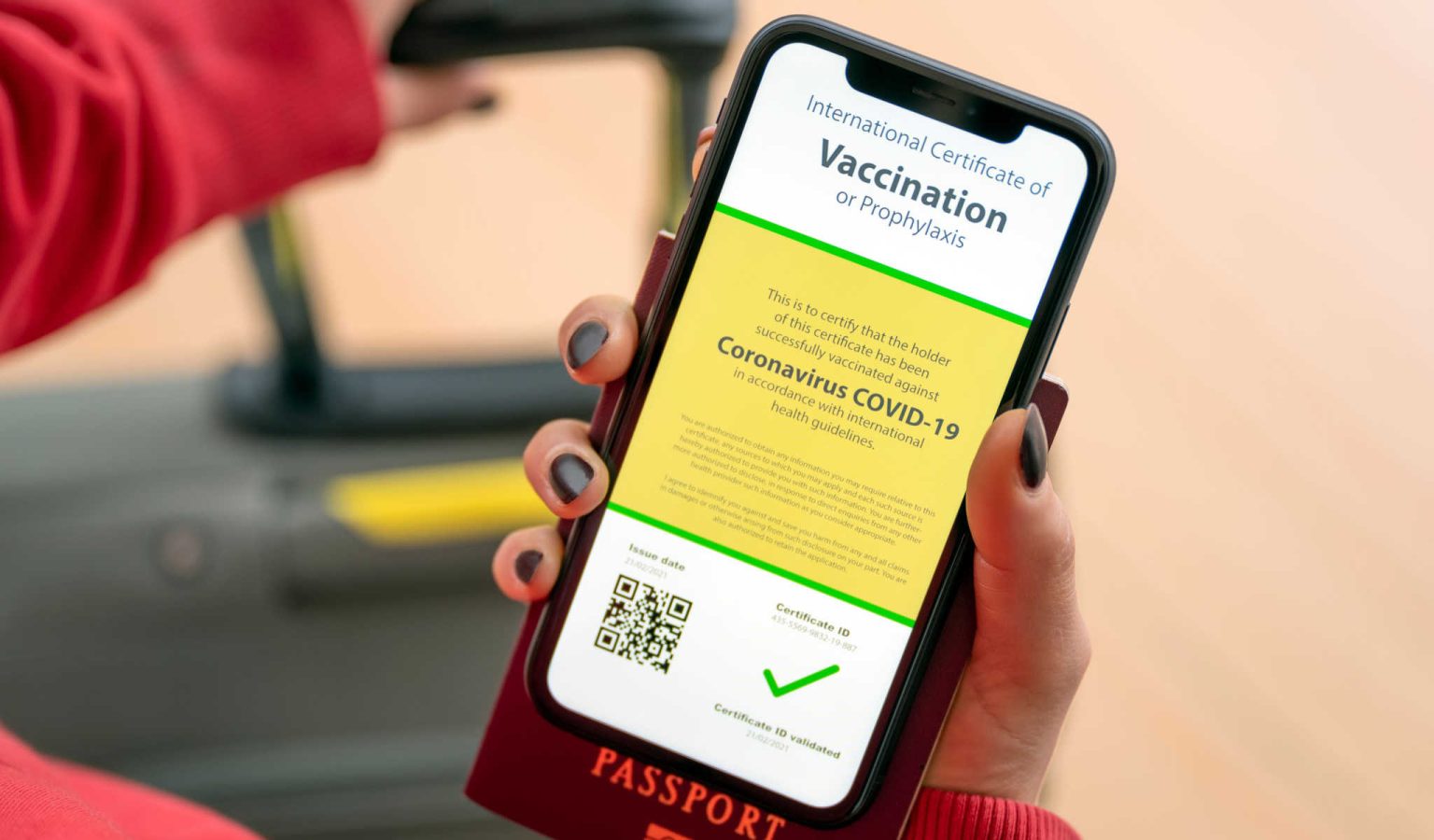
In early March 2021, Israeli law required the presentation of a Green Pass certificate as a precondition for entering certain businesses and public spheres. Entitlement for a Green Pass was granted to Israelis who have been vaccinated with two doses of COVID-19 vaccine, who had recovered from COVID-19, or who were participating in a clinical trial for vaccine development in Israel.
The Green Pass was publicly justified as an essential measure for retaining immune individuals’ freedom of movement and for promoting the public interest in reopening the economic, educational, and cultural spheres of activity (Kamin-Friedman and Peled Raz, 2021). Kamin-Friedman and Peled-Raz even exclaimed that “although the Green Pass may not correlate with trust building or the promotion of solidarity, it is ethically vital to consider its application under the Israeli circumstances” (2021: 3).
Yet, in August and September 2021, despite the policy, the case numbers continue to skyrocket, with over 7,000 new cases reported daily and approximately 600 people hospitalized in serious condition with the disease. This was despite the fact that over 57% of the country’s 9.3 million citizens had received two doses of the Pfizer/BioNTech vaccine, and over 3 million of Israel’s 9.3 million people had received a third shot. In response, the Israeli government broadened its scope to infringe on almost all aspects of life.
By the 8th of August the Green Pass policy was extended to schools, Academia, and voluntarily adopted by various organizations in the public and private sectors (even hospitals). Employers quickly used their prerogative to restrict the access of unvaccinated employees to the workplace, and in some cases even terminate their work.
By the 30th of September, holders of Israel’s vaccine passports were directed to get a third dose of the Pfizer -BioNTech vaccine, or lose their Green Pass that allowed them crucial and basic freedoms. In September 2021, the Israeli Ministry of Health confirmed that cases are occurring in both vaccinated and unvaccinated populations. Israeli findings also confirmed that the Pfizer vaccine’s ability to prevent severe disease and hospitalization is waning over time — as is the shot’s protection against mild and moderate disease.
Even so, only on February 11th did Prime Minister Naftali Bennett announce the end of the program, ironically while the new COVID-19 infections remained high.
Fotaki and Hyde (2015) found that escalation of commitment is more likely to be accompanied by three self-protecting mechanisms: idealization, splitting, and blaming. Idealization occurs when decision-makers set unrealistic goals or expectation yielding aggressive policies (i.e. Zero contamination, beating Delta, or reaching herd immunity through vaccination).
Splitting refers to a tendency to divide the world into “good” and “evil” (Prime Minister Bennett was cited saying: “Dear citizens, those who refuse vaccines are endangering our freedom to work, the freedom of our children to learn and the freedom to hold celebrations with the family”). Blaming involves projecting unwanted parts of the undesirable situation onto those typified as “bad” or “evil.” In this way the evidence of failure is blamed onto the group typified as “evil,” rather than triggering meaningful action to resolve problems.
The Green Pass policy assumes that since people are loss-averted, the fear of heavy restrictions, social amenity, and possible loss of income will push them to vaccinate. It also conveniently paints a suitable culprit to be blamed for the strategy’s failed outcomes.
Yet, loss aversion also means that those belonging to the newly formed privileged group will insist on holding on to their privileges even when proven that these privileges can put others at risk of infection. This privileged group may also develop a false sense of immunity, causing them to forego protective measures such as wearing masks, and social distancing, putting them even more at risk of spreading the disease without them even knowing.
And so, loss aversion may inadvertently motivate the very behaviors policymakers want to prevent. More importantly, it dangerously allows this group to maintain a collective fantasy that the strategy achieves its goals. Imagine their frustration upon discovering that their “stepping up and taking a risk for the sake of the communal goal of vaccine development” was at best futile, and at worst put them at risk of contracting the disease or suffering the vaccine’s side effects.
But is the Green Pass policy effective in pushing objectors to vaccinate? A study conducted by the Dror (Imri) Aloni Center for Health Informatics in July-August 2021 revealed that over 58% of the 600 participants in the study said that fear from sanctions was a major factor in their decision to vaccinate. Fifty-six percent of the participants who were fully vaccinated thought that the Green Pass policy’s whole purpose was to pressure people to vaccinate.
Even so, 44% of them supported its application. However, 73% of the unvaccinated participants claimed that the Green Pass policy was a coercive measure and reported being very disturbed by the steps taken to encourage vaccination. The study also reveals a staggering decline in trust in both the government and the medical establishment by those who refuse to vaccinate.
The greater the distrust, the greater the fear of sanctions. But the greater the fear of sanctions, the more those objecting to vaccinate were adamant not to vaccinate. The erosion of trust found in this study echoes other studies indicating that the Israelis are losing trust in public institutions, with over half saying the country’s democracy is in danger (Plesner, Y and T, Helman, 2020).
A recent study investigating COVID-19 vaccine hesitancy using nationally representative samples of 1,000 individuals from 23 countries revealed that across all countries, vaccine hesitancy is associated with a lack of trust in COVID-19 vaccine safety, and skepticism about its efficacy. Vaccine-hesitant respondents are also highly resistant to required proof of vaccination; 31.7%, 20%, 15%, and 14.8% approve requiring it for access to international travel, indoor activities, employment, and public schools, respectively (Lazarus, Wyka, White, Picchio, Rabin, Ratzan, El-Mohandes, 2022).
To conclude, not only did the Green Pass policy fall short of achieving its public health goals, it also further erodes the public’s trust in government and the medical establishment, and dangerously binds the decision-makers to a damaging course of action.
From a strategic perspective, such policy overreaction during situations of emergencies pushes governments to entrench, seeking more aggressive measures to enforce the policy while suppressing rising public resistance. It is thus pushed to apply a variety of censorship and suppression tactics, including the retraction of papers pointing to vaccine safety problems, obstructing research funding, summoning to official hearings, and even the suspension of medical licenses, all in the hope of crushing resistance (Guetzkow, Shir-Raz, Ronel, 2022).
Slowly the goal becomes enforcing the policy rather than protecting the public’s health and effectively managing the health condition.
References
- Bazerman, M., & Neale, M. (1992). Nonrational escalation of commitment in negotiation. European Management Journal, 10(2), 163-168.
- Fotaki, M., & Hyde, P. (2015). Organizational blind spots: Splitting, blame and idealization in the National Health Service. Human Relations, 68(3), 441-462.
- Hafsi, T., & Baba, S. (2022). Exploring the Process of Policy Overreaction: The COVID-19 Lockdown Decisions. Journal of Management Inquiry, 10564926221082494.
- Kamin-Friedman, S., & Peled Raz, M. (2021). Lessons from Israel’s COVID-19 Green Pass program. Israel Journal of Health Policy Research, 10(1), 1-6.
- Leigh, J. P., Moss, S. J., White, T. M., Picchio, C. A., Rabin, K. H., Ratzan, S. C., … & Lazarus, J. V. (2022). Factors affecting COVID-19 vaccine hesitancy among healthcare providers in 23 countries. Vaccine.
- Moser, K., Wolff, H. G., & Kraft, A. (2013). The de‐escalation of commitment: Predecisional accountability and cognitive processes. Journal of Applied Social Psychology, 43(2), 363-376.
- Muller, S. M. (2021). The dangers of performative scientism as the alternative to anti-scientific policymaking: A critical, preliminary assessment of South Africa’s Covid-19 response and its consequences. World Development, 140, 105290.
- Plesner, Y and T, Helman, 2020, The Israeli Measure of Democracy. Israeli Institute of democracy, Jerusalem.
- Samimian-Darash, L. (2013). Governing future potential biothreats: Toward an anthropology of uncertainty. Current Anthropology, 54(1), 1-22.
- Sleesman, D. J., Lennard, A. C., McNamara, G., & Conlon, D. E. (2018). Putting escalation of commitment in context: A multilevel review and analysis. Academy of Management Annals, 12(1), 178-207.
Author

received her PhD from Bar-Ilan University. She is the Head of the Dror (Imri) Aloni Center for Health Informatics, at Ruppin Academic Center. Her research interests include: implementation of health technologies, knowledge management, organizational politics, gift-giving, and organizational trust relations. She is a member of the PECC general assembly.
The Injustice of Banning Novak Djokovic From Playing in the 2022 US Open
By Mark Da Cunha, Capitalism Magazine, 2022-08-26
The Biden administration bans the best tennis player in the world, unvaccinated Novak Djokovic, from playing in the 2022 US Open, even though the CDC says he is safe, preventing Djokovic from tying Rafael Nadal’s 22 grand slam record. Politics, not science.

Tennis champion Novak Djokovic, who played in the 2021 US Open final, will not play in the 2022 U.S. Open, because of a Biden administration rule that bans unvaccinated non-resident foreigners from entering the U.S. Unvaccinated US citizens and foreign permanent residents, who are covid-19 positive, are allowed to enter.
Sadly, I will not be able to travel to NY this time for US Open. Thank you #NoleFam for your messages of love and support. ❤️ Good luck to my fellow players! I’ll keep in good shape and positive spirit and wait for an opportunity to compete again.
Q&A: Harnessing the power of nature to address water and climate challenges
【能源与环境】 | Energy & Environment
By Tom Johnson,Stanford Water in the West Program,2022-08-18
A Stanford water policy expert discusses how investments in nature could simultaneously help states bolster water supplies and achieve their climate goals.

A beaver chews on vegetation in a beaver pond. (Image credit: iStockPhoto/Rejean Bedard)
This has been a summer of extremes. As America wilts under unprecedented waves of heat, parts of the country have been inundated with flooding rains that climate scientists say should only happen on average once every 500 years. Meanwhile, reservoir levels across the West have bottomed out amidst a withering drought, imperiling water supplies from Denver to Los Angeles and threatening to dry up millions of acres of agricultural land in between.
Recent passage of funding for climate measures suggests that the federal government is ready to join states in addressing climate change. For years, policies in many states have incentivized electric vehicles, energy efficiency, and decarbonization. Below, Stanford’s Felicia Marcus discusses how states are also turning to nature in their efforts to combat climate change. Marcus, the William C. Landreth Visiting Fellow at Stanford’s Water in the West program, is an attorney and water policy expert who has worked on water-related management and policy issues at the federal, state, and local levels. She recently conducted a study of nature-based solutions, such as restoring beaver habitat to enhance water supplies, reduce the severity of forest fires, and sequester carbon, in Colorado River Basin states. Results of this study, which has not been peer-reviewed, have been released as a report and briefs published on Water in the West.
Marcus says that nature-based solutions represent a largely untapped opportunity for state climate policy leaders to achieve multiple benefits for people and ecosystems while fortifying the fight against climate change.
Why focus on nature-based solutions when thinking about climate and water?
Water and climate are two different sectors working more separately than they should be. We need to figure out how to work together across disciplines to achieve multiple benefits, because there isn’t enough money to do everything separately, and because we need every tool in the toolkit to meet the nightmare challenge that climate change presents.
How can nature-based solutions help meet our climate and water goals at the same time?
By strategically restoring forests, we can protect larger trees that sequester more carbon and prevent outsized catastrophic fires that release huge carbon plumes, and we can prevent downstream reservoirs and waters from accumulating mud and toxins. By restoring meadows and other water features, we can create natural firebreaks and sequester carbon while enhancing biodiversity, water quality, and water runoff.
Can nature-based solutions play a role in urban areas?
An urban example can be found in Los Angeles, where the county has embarked on a $300 million per year effort to divert water out of flood control channels and into green spaces. As the water soaks into the ground, it replenishes groundwater tables. The water that does run off is cleansed as it passes through the soil and plants before heading to the ocean. That much-needed green space provides more local water resilience and cleaner beaches while saving energy.
What are the most promising areas to align climate and water through nature-based solutions?
Meadow restoration is in some ways the most inspiring. We can restore meadows in ways that create natural firebreaks and increase biodiversity. Meadows slow the flow of water, which results in better timing of water delivery and greater aquifer recharge. Sediment is held back, rather than flowing downstream, which preserves water storage space and increases the lifespan of our reservoirs. In many places, beavers are also reintroduced to help replace those we’ve lost.
Forests are the most promising area in the short run. Forests are massive, and restoration projects have multiple benefits. Strategically clearing undergrowth enables more water to stay in the soil or flow down the watershed and helps prevent the unnaturally gigantic fires that come from overgrown forests. Instead of burning, large trees survive and grow larger, allowing them to absorb and store more carbon. Better forest management protects people and property while preventing the enormous plumes of carbon that fires release. There’s growing recognition worldwide that fires on our natural lands are greater emitters of carbon than fossil fuels.
Let’s talk about beavers. How can they help with climate and water-related challenges?
Beavers are nature’s little engineers. They build dams to create safe havens underwater, but those dams also slow and spread the flow of water. Dams create meadows and marshes and wetlands behind them that serve as fire breaks. They’re a natural antidote to these massive, outsized conflagrations we’re seeing.
Wet, marshy lands also do a great job of sequestering carbon, and they filter water as it passes through them. Impurities and sediments settle out, resulting in cleaner water. Because marshes slow flow, water also has time to infiltrate and replenish aquifers. The timing of flows downstream is delayed in a manner that mimics melting snowpack. Marshes are natural storage devices in and of themselves, which we desperately need at a time when climate change is causing decreases in snowpack. Beaver dams and the marshes that develop behind them are the next best thing.
Finally, beavers create habitat for a bunch of other species that are drawn to water. And beavers are very industrious. They do the work for you – because it’s what they do.
Felicia Marcus is the William C. Landreth Visiting Fellow at Stanford’s Water in the West Program. Prior to joining Stanford, Marcus served as chair of the California State Water Resources Control Board during a time of unprecedented drought and change. Marcus is working on identifying opportunities to use nature-based solutions to solve both climate and water issues in the Colorado River Basin.
State Climate Policy and Nature-based Solutions: A Match that Yields Benefits for Climate, Water, and More, a study conducted by Felicia Marcus, was funded by a grant from the Walton Family Foundation.
The Pfizer/BioNTech Vaccine Monopoly: The Backstory
【企业社会责任与可持续发展】| CSR & Sustainability
By Robert Kogon,2021.11.15
The notion that vaccine mandates and related measures to compel vaccination are the product of the influence of “Big Pharma” on governments is a commonplace among the critics of such measures. Moreover, with the Pfizer vaccine going from one regulatory success to another and increasingly dominating the Covid-19 vaccine market in both the United States and continental Europe (not to mention Israel, whose vaccination campaign has consisted almost exclusively of Pfizer), it is clear that what is really meant today by “Big Pharma” must be Pfizer and Pfizer alone.
Following negative media coverage of adverse effects (in particular, thrombosis) and, in some cases, regulatory intervention on the part of national supervisory agencies, both of the other actual “Big Pharma” alternatives, AstraZeneca in the EU and Johnson & Johnson in the EU and the US, have been relegated to the status of bit players outside of the United Kingdom.
It would appear that in the West at least, we are moving toward a virtual Covid-19 vaccine monopoly for Pfizer. Even the Covid vaccine of Moderna – a company that famously had never brought a drug to market previously and hence that could hardly be described as “Big Pharma” – is increasingly coming under scrutiny for causing myocarditis in young males and its use is being restricted to people over 30 in a whole series of European countries.
Pfizer, by contrast, has remained untouched. This even though myocarditis is a widely-reported and officially acknowledged adverse effect of both mRNA vaccines, Moderna and Pfizer, even though recent statistical analysis by the CDC, at any rate, found no “significant difference” in reported myocarditis between the two vaccines for males 18-25, and even though there is evidence that Moderna provides longer-lasting protection (the effectiveness of the vaccine even being twice that of Pfizer six months on, according to this recent study [p. 11]).
What greater proof of the inordinate power of “Big Pharma” – i.e. Pfizer – could there be? But if Pfizer did not rule the world two years ago, how did it come to rule the world today?
Moreover, as many Americans will only have discovered when the FDA’s full approval of the “Pfizer” vaccine was given not to Pfizer, after all, but to BioNTech Manufacturing GmbH of Mainz, Germany, the actual developer of the so-called “Pfizer” vaccine is precisely Pfizer’s German partner BioNTech.
This is already evident indeed from the codename of the vaccine: BNT162b2. Needless to say, “BNT” does not stand for Pfizer. The partnership agreement between the two firms likewise makes abundantly clear that BNT162b2 is BioNTech’s vaccine. Thus, apart from its own direct proceeds from sales of the vaccine, BioNTech receives “up to double-digit tiered royalty payments” from Pfizer on the latter’s sales of the vaccine in Pfizer’s assigned territories.
This is in addition to “$120 million in upfront, equity and near-term research payments and up to an additional $305 million in potential development, regulatory and commercial milestone payments”. (See BioNTech press release here.) BioNTech, incidentally, has a similar agreement with Fosun Pharma for commercializing its vaccine in China.
Now, far from being “Big Pharma,” prior to the outbreak of the Covid-19 pandemic, BioNTech was still, in effect, a small, struggling start-up, which, like Moderna, had yet to bring a product to market. BioNTech’s own 2019 annual report filing to the SEC describes the company as follows: “We are a clinical-stage biopharmaceutical company with no pharmaceutical products approved for commercial sale.”
The filing continues frankly, “We have incurred significant losses since our inception and we anticipate that we will continue to incur significant losses for the foreseeable future….” Thus, in the 2nd quarter of 2020, BioNTech had only 41.8 million euros in (non-product) revenues and losses of more than twice that amount (88.3 million euros). Thanks to its Covid-19 vaccine, however, one year later, in the 2nd quarter of 2021, its revenues had rocketed to 5.31 billion euros – a more than 100-fold increase! – of which over three-quarters (4 billion euros) is profit.
As the economist Carsten Brzeski of the Dutch bank ING put it to Reuters, BioNTech had gone “from 0 to 100 in just a year.” BioNTech’s recently announced 3rd quarter results show estimated revenues of over 6 billion euros and gross profits of nearly 4.7 billion euros.
The story of how BioNTech went from zero to hero is a pure story of government interventionism and subsidies. Indeed, the German government supported the very founding of BioNTech. It was thus in fact the German government that identified biotechnology as an important, potential growth sector and, in 2005, launched a funding program whose explicit aim was to promote biotech start-ups based on academic research: the Gründungsoffensive Biotechnologie – roughly, the “Biotechnology Start-Up Offensive” – or “Go-Bio” for short.
The idea, as explained here (link in German), is to provide up to two rounds of support: a first grant to a research team with a commercially promising project and then, supposing the research team succeeds in founding a company based on its research, a second grant to the start-up.
BioNTech was one of the firms to be brought into existence under the aegis of the Go-Bio program. In 2007, Go-Bio first provided a 1.2 million euro “Phase I” grant of 1.2 million euros to support BioNTech founder Ugur Sahin’s research at the University of Mainz on developing mRNA-based cancer treatments, and it then followed that up with a nearly 3 million euro “Go-Bio Phase II” grant to the newly-founded BioNTech RNA Pharmaceuticals GmbH in 2010. (For the details, in German, see here.)
In the years to come, BioNTech would continue to enjoy public support: both from the state government of Rhineland-Palatinate, of which Mainz is the capital, and as leading member of a so-called “cluster” of companies and research establishments in the Mainz region that from 2012 to 2017 received 40 million euros in support (link in German) from the German Federal Ministry of Education and Research. The cluster is named the Cluster for Individualized Immune Intervention or “Ci3”. The chairs of Ci3 are Sahin’s wife and BioNTech Chief Medical Officer, Özlem Türeci, and BioNTech co-founder Christoph Huber.
But the flow of public manna to BioNTech then increased massively last year, when the outbreak of the Covid pandemic provided the company the opportunity to pivot from its hitherto unsuccessful efforts to develop mRNA-based cancer treatments to developing an mRNA-based vaccine against Covid-19.
Per this timeline published by the German public broadcaster SWR, BioNTech had already contacted German’s public regulatory agency for vaccines, the Paul Ehrlich Institute, about its plans to develop a Covid-19 vaccine in February 2020 – at a time when scattered reports about local Covid-19 infections were first emerging in Europe and before the WHO had even declared there to be a pandemic!
By April, clinical trials were already underway! (See the EU Clinical Trial Register here.) On September 15, the German government announced that it was providing BioNTech 375 million euros in subsidies (link in German) to support its Covid-19 vaccine. The European Bank for Investment had already pitched in 100 million euros in debt financing. The German funding does not have to be repaid.
But with an overall average corporate tax rate of around 30% in Germany and an effective federal rate of almost 16%, the German government figures to get a healthy return on its investment. According to the company’s current projections, BioNTech is expected to have 16-17 billion euros in Covid-19 vaccine revenues for 2021.
Already after the announcement of BioNTech’s 2nd quarter results, the German economist Sebastian Dullien calculated that BioNTech revenues alone will represent about 0.5% of German GDP and thus account for 0.5% growth in German GDP – i.e. since BioNTech contributed essentially nothing to German GDP previously! BioNTech alone would thus account for about 1/8 of Germany’s expected GDP growth for 2021.
These calculations were based, however, on a slightly lower revenue forecast and significantly higher expected GDP growth. Based on the current forecast of 2.4% German growth, BioNTech alone would account for more than 1/5 of German growth. According to its most recently released financials, moreover, the company’s 2021 tax bill to date comes to over 3 billion euros.

European Commission President Ursula von der Leyen presents the Atlantic Council Distinguished Business Leadership Award to Pfizer Chair and CEO Albert Bourla on November 10, 2021.
For all the talk of the power of Big Pharma, the Covid-19 vaccine that is currently becoming the standard throughout the Western world has a far more powerful state sponsor and the state sponsor is Germany. This raises particularly obvious and thorny issues for the European Union, where the vaccine contracts for all 27 member states were negotiated by a European Commission that is headed by former German Minister of Defense Ursula von der Leyen.
(The Commission was assisted by a “Joint Negotiation Team” representing seven member states including Germany [see under “Vaccine negotiations” here]; which is to say that Germany was, in effect, participating in negotiations with its own protégé. Perhaps not surprisingly, the largest volume of doses was ordered from none other than BioNTech/Pfizer [see under “What were the results…” here.)
But with Germany able to amplify its power and project it on a global scale precisely via the European Union, German sponsorship of the BioNTech/“Pfizer” vaccine also raises issues for the world as a whole.
Author
Stanford engineers point the way to more affordable, sustainable urban neighborhoods
【企业社会责任与可持续发展】| CSR & Sustainability
A Stanford University analysis(link is external) could help policymakers across the U.S. spend billions of dollars in new federal infrastructure funding more wisely. The study, published March 31 in Frontiers in Sustainable Cities, presents a first-of-its-kind framework to design the most efficient building mix for an urban district along with systems that supply wastewater treatment, cooling, heating and electricity. The approach optimizes hourly demand and supply of power and water with integrated neighborhood-based power and water plants, significantly reducing costs and pollution compared to traditional systems that serve larger areas. This, in turn, could lead to more walkable, livable and affordable cities.
“Instead of building blindly, we can use this framework to look at the longer-term, forecast development effects and put numbers behind plans,” said study lead author Pouya Rezazadeh Kalehbasti(link is external), a graduate student in civil and environmental engineering at Stanford’s School of Engineering at the time of the research.

Aerial view of Songdo, Korea |Michael Lepech
a city collaboratively designed by architects and urban planners as a model for sustainable, high-tech urban living.
Using advanced technologies, integrated power and water plants can be relatively compact – about the size of two or three low-rise buildings – highly efficient and capable of recycling wastewater into potable water. They emit no odors, can run on renewable power sources, such as solar energy, and emit low or no emissions. Each plant can serve between 100 and 1,000 buildings, depending on the buildings’ sizes and resident populations. More than 4,000 integrated power and water systems already exist in the U.S., China and other countries, especially Europe and Canada. Private corporations and universities, such as Stanford, have seen significant energy efficiency gains after adopting some form of the approach.
With an eye toward optimizing the approach, the researchers modeled two scenarios over 20 years of simulated operation. The first scenario was a building mix and energy system designed together along a conventional central wastewater treatment plant powered by the grid. The second scenario integrated advanced wastewater treatment systems – forward osmosis-reverse osmosis and forward osmosis-membrane distillation – into the building and energy design.
The analysis found that fully integrating power and water systems with building mixes resulted in a 75% reduction in social, environmental and economic damage from carbon emissions, and a 20% reduction in lifecycle equipment costs compared to traditional segregated systems. The reductions were due primarily to the reuse of wasted heat and electricity in treating wastewater, and powering the wastewater treatment system with a low- to zero-emission local energy system, rather than the regional electric grid.
The approach proposed in this study is expected to inform urban planners and infrastructure designers of a range of optimal configurations for designing a neighborhood. This way, they could coordinate design of integrated power and water plants with zoning rules, such as imposing limits on industrial buildings, to lead to more environmentally and economically sustainable urban neighborhoods.
“It is exciting to see that by integrating existing infrastructure with new urban technologies, and optimizing their performance in unison, we can discover new, substantial pathways toward global carbon reduction,” said study co-author Michael Lepech, a professor of civil & environmental engineering.
The researchers hope that urban planners will someday use an expanded version of the framework to design a range of other systems, including garbage removal and traffic control. As technologies advance, the framework could also incorporate new efficiencies, such as using power plant heat to dry wastewater biosolids, thereby reducing disposal needs and creating a source of renewable biofuels.
Craig Criddle, a professor of civil & environmental engineering, also coauthored the study. Lepech is also faculty director of the Stanford Center at the Incheon Global Campus, a research center in Korea focused on smart, sustainable cities and urban communities. Lepech and Criddle are also senior fellows at the Stanford Woods Institute for the Environment. Criddle is director of the William and Cloy Codiga Resource Recovery Center, a facility on Stanford’s campus for testing and accelerating the commercialization of promising technologies for the recovery of clean water and energy from wastewater.
This research was funded by the Leavell Fellowship on Sustainable Built Environment from Stanford’s Department of Civil and Environmental Engineering and AP Thailand.
Cleaning up the World, One Building at a Time

It was in 2013 when Leia de Guzman — then an undergraduate working on a campus project to build a solar-powered house — learned that buildings generate about 40% of the world’s carbon emissions. As someone who was already, as she puts it, “passionate about the notion of battling climate change,” de Guzman suddenly saw a vast opportunity to do this through the built environment.
The other epiphany came when she and her team were looking into energy efficiency technologies that could be applied to buildings, which generate emissions through everything from lighting, heating, and cooling to appliances and elevators. “The real discovery was that a lot of these technologies already exist,” says de Guzman, who was pursuing a joint bachelor’s degree in environmental science and commerce at Canada’s Queen’s University.
Fast-forward to today, and de Guzman, a recipient of Stanford GSB’s Climate Solutions Prize, plans to decarbonize the world’s buildings through an artificial intelligence startup called Cambio. She and her co-founder, Stephanie Grayson, also MBA ’22, are developing a software platform that will give commercial real estate owners and occupiers the data-driven insights needed to put their buildings on a path to net-zero emissions.
To achieve maximum impact, the team’s focus is on older buildings, rather than new or recent construction, since older structures generate 75% of the sector’s emissions, of which commercial real estate portfolios are a large piece. Second, as a former investor who has deployed $7 billion in capital across Canada, Europe, and Asia, de Guzman observed that most of the world’s real estate lies in very few hands: institutional investors, commercial landlords, and large corporate tenants.
The question, then, became how to encourage these groups to decarbonize. De Guzman identified a clear answer to this: “You build software to target that cohort,” she says. “And that’s what we’ve set out to do.”
The Problem
Transforming the world’s stock of older buildings into low-carbon, sustainable buildings is a daunting task. First, while new buildings can easily incorporate the latest technologies, materials, and systems during construction, existing buildings require retrofitting of structures that may have been standing for decades, or even centuries.
Moreover, the real estate sector lags others in digital transformation — something de Guzman saw while at Oxford Properties Group. “I experienced first-hand how undigitized the commercial real estate industry is,” she says. “If we can apply AI-based recommendations to consumer retail or transportation logistics, why can’t we apply it to buildings?”
Pressure to decarbonize buildings is growing. Governments are pushing the real estate sector to disclose more sustainability information. Some even require buildings to display energy certificates publicly, providing a “name-and-shame” incentive to those with low ratings. Meanwhile, corporate tenants, property owners, and investors are setting ambitious net-zero goals. “For the first time in real estate history, all stakeholders are asking for the same thing,” says de Guzman.
However, retrofitting large commercial portfolios is currently cumbersome. “It’s manual, expensive, and spreadsheet-led, and it results in decisions made in silos,” says de Guzman. “So institutional landlords and corporate tenants are not optimizing for deployment of their time and capital.”
She also points out that current analytics providers tend to focus on individual buildings and most offer no recommendations for steps to take based on the data. “Commercial real estate managers currently have a fragmented user journey,” she says. “And it’s hard to apply a lot of the insights.”
The Novel Idea
What Cambio offers, de Guzman says, is a portfolio overview showing which buildings are high performers on energy efficiency and resource consumption, and which need upgrades. This provides a data-driven view of where to focus across a real estate portfolio.
“But after seeing the 40,000-foot view, Cambio enables you to double-click down to the building level to see exactly you need to do in each building, whether it’s upgrading the lighting or replacing the HVAC,” she says. “Buildings are complex pieces of equipment that have multiple levers you can pull to make them more efficient and sustainable — that’s where the opportunity lies.”
Using technologies such as natural language processing and computer vision (which extracts information from visual records such as digital images), Cambio captures data from everything from utility bills and building permits to construction and renovation records.
In addition to showing clients where to prioritize their investments, Cambio also identifies any available green loans, tax rebates and other financial incentives. “Here’s where we really differentiate ourselves,” she says. “We overlay ROI [return-on-investment] and regulatory impacts across our recommendation system.”
De Guzman also knows that driving change at scale through the building sector means creating a process that is simple and streamlined. “We want to provide a single application that is a one-stop shop for your retrofitting journey.”
The Innovator
After completing her undergraduate studies, de Guzman knew exactly what she wanted to do — tackle climate change — and where she wanted to work: Oxford Properties Group.
Owned by Canada’s Ontario Municipal Employees Retirement System pension fund, Oxford Properties has ambitious carbon reduction goals. “They were one of the first real estate companies in North America to release a sustainability report,” says de Guzman. “It was exciting to me that they were leaving a sustainable mark on the world through their investments. So they were top of my list.”
With no contacts in the industry, de Guzman took to the phone, emailing and cold calling about 70 real estate executives in Toronto and took a three-hour bus trip to the city to meet whomever she could for a few minutes. “That’s how I landed my dream job,” she says.
Some of this determination can be put down to her roots. Born in a fishing village in the Philippines, de Guzman’s family moved to Canada when she was young. “Growing up in a family with an immigrant mentality, I worked very hard at school,” she says. She earned a full academic scholarship to Queen’s University.
However, in addition to her work ethic, de Guzman also has a sense of purpose that she knows is essential when taking on the challenges of being a founder. “It’s absolutely critical, especially when you’re venturing out to do the daring thing,” she says. “When you’re disrupting your industry with an entirely new solution, you have to be passionate about the cause.”
Luck has also played its part. Through a chance introduction before embarking on her MBA at Stanford GSB, she ended up as roommate of Grayson, who became her cofounder and was one of only two other real estate investment students in her class. “A lot of the little pushes that got us to where we are now seem to have been fate,” de Guzman says. “It feels meant to be.”
Reprinted from Stanford Business.
Historical Retrospective: From Leaded Gasoline to Teflon (II)
【企业社会责任与可持续发展】| CSR & Sustainability
By Give, Jointing.Media, in Shanghai, 2022-08-28
From “Miracle” Material to Stealth Threat for Environment and Health
In the annals of 20th-century scientific inventions, Teflon undoubtedly occupies a prominent place. This polymer material, accidentally discovered in 1938 by DuPont chemist Roy Plunkett, quickly became an industrial and domestic darling due to its exceptional heat resistance, chemical inertness, and remarkably low friction coefficient. Yet as time passed, the shadow behind Teflon’s brilliance emerged, with its potential harm to human health and the environment sparking global concern and debate.
Initially hailed as the dawn of a chemical revolution, Teflon—scientifically known as polytetrafluoroethylene (PTFE)—exhibits near-total resistance to chemical reactions and maintains stability under extreme temperatures. In 1954, Colette Grégoire, wife of French engineer Marc Grégoire, proposed using Teflon for cookware. This inspired the founding of Tefal and the world’s first non-stick frying pan. By the 1960s, Teflon-coated cookware had taken households by storm, becoming a kitchen staple worldwide. Simultaneously, its applications expanded dramatically across aerospace, electronics, and medical industries.
However, the production of Teflon involved the use of perfluorooctanoic acid (PFOA), a persistent organic pollutant with significant bioaccumulative potential and toxicity. Research indicates that PFOA is virtually non-degradable in the environment and can accumulate through the food chain, ultimately posing serious threats to human health. As early as 1961, an internal DuPont study revealed liver damage in laboratory rats exposed to PFOA, yet these findings were never publicly disclosed.
During the 1970s-1980s, DuPont discovered widespread presence of PFOA in employees’ bloodstreams, correlating with health issues such as elevated cholesterol levels and increased liver enzymes. Despite these findings, the company failed to implement effective measures to reduce worker exposure or disclose the risks to the public.
The turning point came in 1998 when West Virginia farmer Wilbur Tennant accused DuPont of contaminating his property, leading to livestock deaths. Tennant uncovered that DuPont had been dumping waste from its Teflon production into nearby landfills, polluting local water sources. This incident triggered an investigation by the U.S. Environmental Protection Agency (EPA). Attorney Robert Bilott, representing Tennant and affected residents, discovered during litigation that DuPont had known about PFOA’s hazards for decades while systematically concealing the evidence.
In 2004, DuPont reached a settlement with the EPA, agreeing to pay a record $16.5 million fine – one of the largest ever imposed for chemical pollution – while pledging to phase out PFOA use. Subsequent research confirmed severe health impacts: A 2005 epidemiological study by West Virginia University and DuPont found significantly higher rates of kidney and testicular cancers among communities with long-term PFOA exposure. The study showed a 20-30% increased kidney cancer risk for residents with elevated PFOA blood levels. The International Agency for Research on Cancer (IARC) subsequently classified PFOA as a Group 2B carcinogen (“possibly carcinogenic to humans”).
The EPA initiated PFOA risk assessments in 2006, listing it as a “likely carcinogen.” That same year, DuPont committed to eliminating PFOA by 2015. However, environmental and human contamination persists, while replacement compounds like GenX exhibit similarly concerning persistence and toxicity – demonstrating a troubling pattern of regrettable substitutions in industrial chemistry.
The health hazards posed by Teflon extend far beyond PFOA. When Teflon-coated products like non-stick cookware are used at high temperatures, the coating may decompose and release toxic gases such as hydrogen fluoride and perfluoroisobutylene. These gases not only harm the respiratory system but can also cause “polymer fume fever,” a flu-like condition. While manufacturers claim Teflon is safe under normal use, consumer concerns about its safety have never been fully alleviated.
Environmentally, Teflon’s production and disposal have created severe ecological problems. The PFAS compounds used in Teflon manufacturing are extremely persistent and resist natural degradation. A U.S. Geological Survey (USGS) study detected high concentrations of PFAS in surface and groundwater across multiple American states, particularly near Teflon production facilities. For instance, in Parkersburg, West Virginia – where DuPont operated Teflon plants – PFOA levels in local drinking water sources far exceeded safety standards, exposing tens of thousands of residents to chronic contamination.
The widespread distribution of PFOA and other perfluoroalkyl substances (PFAS) in water, soil and atmosphere has profoundly impacted global ecosystems through bioaccumulation. These chemicals have not only contaminated drinking water sources but also threatened wildlife survival. Research published in Environmental Science & Technology found high PFAS concentrations in Arctic marine mammals (like seals and polar bears), demonstrating these pollutants have reached Earth’s most remote ecosystems via atmospheric and oceanic currents. Furthermore, PFAS have been commonly detected in fish and other aquatic organisms, significantly increasing human exposure risks through the food chain.
PFAS compounds contaminate not only water sources but also accumulate in soil, affecting crop growth. An Australian study found significantly elevated PFAS levels in crops irrigated with contaminated water, demonstrating that humans may be exposed to these chemicals through the food chain even without direct contact with Teflon products.
Growing environmental awareness and stricter regulations are gradually restricting the use of Teflon and related compounds worldwide:
In 2016, the U.S. EPA lowered the health advisory limit for PFOA and PFOS (another PFAS compound) in drinking water from 400 ppt to 70 ppt.
In 2020, the EU listed PFOA under the Stockholm Convention on Persistent Organic Pollutants (POPs), banning its production and sale.
China has also tightened PFAS regulations, restricting their use in certain industries.
However, fully resolving this issue requires global cooperation—from developing safer alternatives to strengthening environmental monitoring and pollution control—a long and challenging road ahead.
If new inventions and products are deployed widely without thorough safety assessments or independent oversight, all of humanity—and Earth’s ecosystems—become unwitting test subjects in a massive experiment. According to Oxford University’s Our World in Data, as of August 11, 2022, 12.44 billion doses of COVID-19 vaccines had been administered globally, with a 67.4% vaccination rate. Are those vaccinated individuals also part of an uncontrolled trial? Only time will tell—just as it did with leaded gasoline and Teflon.
EDITOR’S NOTE:
The success of leaded gasoline emboldened Midgley to invent chlorofluorocarbons (CFCs). By the early 1930s, CFCs entered mass production and proved astonishingly versatile—finding applications in over a thousand products ranging from car air conditioners to deodorant sprays. Only half a century later did humanity discover that these compounds were devouring stratospheric ozone—a protective layer that uniformly absorbs dangerous ultraviolet radiation.
CFCs constituted merely one part per billion of the atmosphere. Yet one kilogram of CFCs could capture and destroy 70,000 kilograms of ozone. These persistent chemicals linger for approximately a century, inflicting continuous damage. Alarmingly, a single CFC molecule traps heat 10,000 times more effectively than a carbon dioxide molecule, significantly amplifying the greenhouse effect.
Time ultimately reveals all truths. But history repeats its tragedies, with each correction requiring centuries while costing millions of lives and inflicting irreversible environmental devastation.
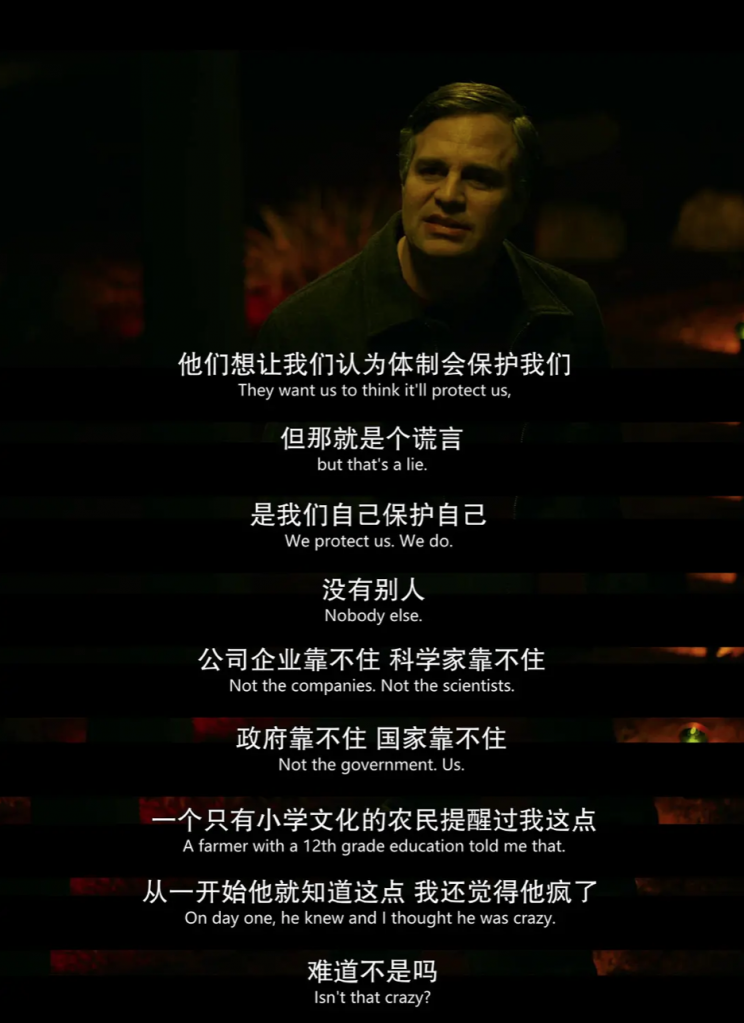
Now in the third year of the global COVID-19 pandemic, a persistent minority continues to reject all COVID-19 vaccines. Recent negative reports about vaccines prompted me to watch Dark Waters—the film adaptation of the Teflon lawsuit against DuPont. Though current vaccine reports lack scientific substantiation, critical evidence won’t emerge spontaneously—it must be doggedly pursued, as Robert Bilott demonstrated through his 17-year crusade. What sustained Robert Bilott through 17 years of relentless litigation against DuPont? A singular commitment to public health and welfare.
In reality, despite financial and reputational damage, DuPont continues selling toxic products to countries beyond the reach of U.S. law. Such corporations persistently prioritize profit over planetary welfare, shielded by systemic impunity. This begs the crucial inquiry: Why must civilizational progress rely exclusively on solitary crusaders—like geochemist Clair Cameron Patterson who exposed lead’s toxicity or attorney Robert Bilott who spent 17 years battling DuPont—to force overdue corrections through sacrificial dedication?
(The End)
Edited by Jas, DeepL, DeepSeek and Youdao
Ralated:
Historical Retrospective: From Leaded Gasoline to Teflon (I)
The Story of Sunflower: Acupuncture Became “good doctor” in Remote Areas
Great Love of the Great Doctor:Zhang Xingru’s Philosophy of Philanthropy
Sustainability Today Foreshadows Tomorrow
Historical Retrospective: From Leaded Gasoline to Teflon (I)
【企业社会责任与可持续发展】| CSR & Sustainability
By Give, Jointing.Media, in Shanghai, 2022-08-28
Amid widespread speculation about potential COVID-19 vaccine side effects, examining the historical cases of Teflon and leaded gasoline provides valuable insights – offering both a window into systemic patterns and historical perspective on our current situation.
Beginning in the 1920s, tetraethyllead became a globally adopted gasoline additive for engine performance enhancement. It took nearly a century before this leaded fuel was completely phased out worldwide. Throughout this period, leaded gasoline contaminated air, soil, drinking water, and food crops – claiming millions of lives and leaving enduring lead pollution in urban soils from New Orleans to London that persists to this day.
In the 1950s, DuPont began using perfluorooctanoic acid (PFOA, also called C-8) to manufacture Teflon polymers. Only after half a century was DuPont legally proven responsible for PFOA-related personal injuries, groundwater contamination, and other environmental damage. While the U.S. government banned PFOA in 2015, the full extent of C-8’s environmental impact across America remains unassessed – let alone its consequences internationally.
Today, gasoline remains commercially available, now lead-free. Nations are actively developing renewable energy alternatives to fossil fuels to meet “dual carbon” emission targets.
Similarly, Teflon cookware coatings remain on the market, manufactured without PFOA but using GenX – a purportedly non-toxic alternative whose safety requires further verification.
100 Years of Poisoned Fuel
Lead is a neurotoxin. Excessive levels of lead in the body can irreparably damage the brain and central nervous system. But lead is easy to refine and mine and extremely profitable to produce on a large scale. So, at the beginning of the 20th century, although everyone knew lead was dangerous, it was still present in consumer products in various forms. Canned foods were sealed with soldered lead, water was often stored in lead-skinned jars, lead arsenate was used as an insecticide sprayed on fruit, and lead was even a component of toothpaste tubes. Almost every product adds a little bit of lead to a consumer’s life. However, it is the lead added to gasoline that people are exposed to the most and for the longest period of time.
In the early 20th century, automobiles entered the lives of the general public, but they frequently experienced engine problems.
In 1921, a General Motors engineer discovered tetraethyllead (TEL) could prevent engine knocking.
Beginning in 1922, countries adopted TEL as a gasoline additive to improve engine performance.
In 1923, three major corporations in the United States—General Motors, DuPont and Standard Oil of New Jersey—established the Ethyl Gasoline Corporation (later renamed Ethyl Corporation) to add TEL to gasoline. The company’s name did not include “lead”.
TEL is a fruity, highly toxic, oily liquid that enters the body through respiration, ingestion and intact skin, and resists excretion. Frontline workers almost immediately showed symptoms like unsteady walking and cognitive impairment—the first signs of poisoning. Almost immediately, Ethyl Corporation adopted a strategy of plausible deniability that proved effective for decades. As noted in Prometheus in the Laboratory (a history of industrial chemistry), when employees developed incurable hallucinations, spokesmen would shamelessly claim: “These people probably went insane from overwork.”
In leaded gasoline’s early production, at least 15 workers died and countless workers fell ill, often with severe symptoms. The exact number is unknowable because the company systematically concealed these incidents, never revealing damaging disclosures about leaks, spills or poisonings. Within days in 1924, five workers died at one inadequately ventilated facility, with 35 permanently disabled.
When General Motors began selling leaded gasoline, public health experts protested. One study called lead a serious public health threat; another described concentrated TEL as a “malignant, slow-spreading” poison. After the factory poisonings, a surge of scientific scrutiny emerged: TEL’s toxicity was confirmed in 1925, and a 1928 study documented dramatically how lead poisoning cases had risen exponentially since 1923.
Amid growing safety concerns, inventor Thomas Midgley Jr. (creator of both leaded gasoline and Freon) staged a public demonstration for reporters to reassure the public. While touting his product’s safety, he poured leaded gasoline on his hands and inhaled its vapors from a beaker for 60 seconds, claiming he could do this daily without harm. In reality, Midgley was acutely aware of the dangers—he had suffered severe poisoning from overexposure months earlier.
A small group of compromised researchers colluded with industrialists, aided by unscrupulous media outlets, exploiting the public’s limited capacity for information verification. Together they drowned out scientific warnings, inflicting immense global harm. Over decades, leaded gasoline claimed tens of millions of lives while causing intellectual disabilities and physical impairments in countless children.
American geochemist Clair Cameron Patterson first encountered lead contamination in his samples during his 1940s graduate studies at the University of Chicago. His subsequent research into Earth’s age revealed the lead industry as the primary cause of skyrocketing lead levels in both the atmosphere and human bodies.
In 1965, Patterson published “Contaminated and Natural Lead Environments of Man“, attempting to alert the public to the environmental and food chain contamination caused by industrial lead use.
Defying Ethyl Corporation’s lobbying efforts, Patterson opposed Midgley’s chemical invention—a stance that pitted him against the entire lead additive industry. His criticism cost him professional collaborations, with even the ostensibly neutral U.S. Public Health Service blacklisting him. In 1971, the National Research Council barred him from its atmospheric lead pollution panel despite his unquestioned expertise.
Patterson’s persistent advocacy ultimately compelled the U.S. Environmental Protection Agency to mandate a 65% reduction in leaded gasoline by 1973, citing its incompatibility with catalytic converters and aggravation of air pollution.
By 1978, Patterson gained admission to the National Research Council’s relevant committee, where his proposals for stricter lead regulation were partially adopted—though deemed to require further study. His 78-page minority report called for immediate controls on lead in gasoline, food containers, paints, glazes, and water systems. Three decades later, most of his recommendations became standard practice across the U.S. and much of the world.
Despite this recognition, leaded gasoline continued poisoning hundreds of millions for another half-century. Its cost advantage ensured continued use in over 100 countries—primarily low-income nations—long after its dangers were established.
In 1996, the United States formally banned leaded gasoline sales on public health grounds.
Europe followed suit in the early 2000s, with developing countries implementing subsequent bans.
China’s State Council issued a 1998 directive mandating nationwide discontinuation of leaded gasoline by July 1, 2000, prohibiting both its sale at stations and use in vehicles.
After 2002, the United Nations Environment Programme (UNEP) launched a global campaign to eliminate leaded gasoline. In August 2021, UNEP announced the complete global phase-out as Algeria’s final July 2021 discontinuation. This achievement is estimated to prevent over 1.2 million premature deaths annually from lead exposure while saving approximately $2.44 trillion each year, contributing significantly to multiple Sustainable Development Goals.
However, unleaded gasoline remains environmentally impactful, emitting gases, particulates, and condensates during combustion. With an estimated 1.2 billion new fossil-fuel vehicles expected on roads in coming decades, UNEP urges nations to accelerate the transition to zero-emission vehicles to address persistent air pollution and climate challenges.
After a century of use claiming millions of lives, lead contamination persists in soils at former production sites. Beyond lead, what other toxins surround us? Can emerging technologies effectively remediate polluted soil, waterways and air? Who safeguards public health? And who can prevent history from repeating? The answers remain troublingly uncertain. This pattern becomes even clearer when examining Teflon cookware – leaded gasoline’s chemical successor introduced thirty years later.
(To be continued)
Edited by Jas, DeepL, DeepSeek and Youdao
Ralated:
![[Recruiting 2011] Jointing.Media](http://jointings.org/eng/wp-content/themes/news-magazine-theme-640/cropper.php?src=/cn/wp-content/uploads/2012/06/123.png&h=50&w=50&zc=1&q=95)


