
OpenAI raises $122 billion. Oracle cuts a fifth of its staff. Is AI creating a monoculture?
By Yibai, Jointing.Media, 2026-04-02
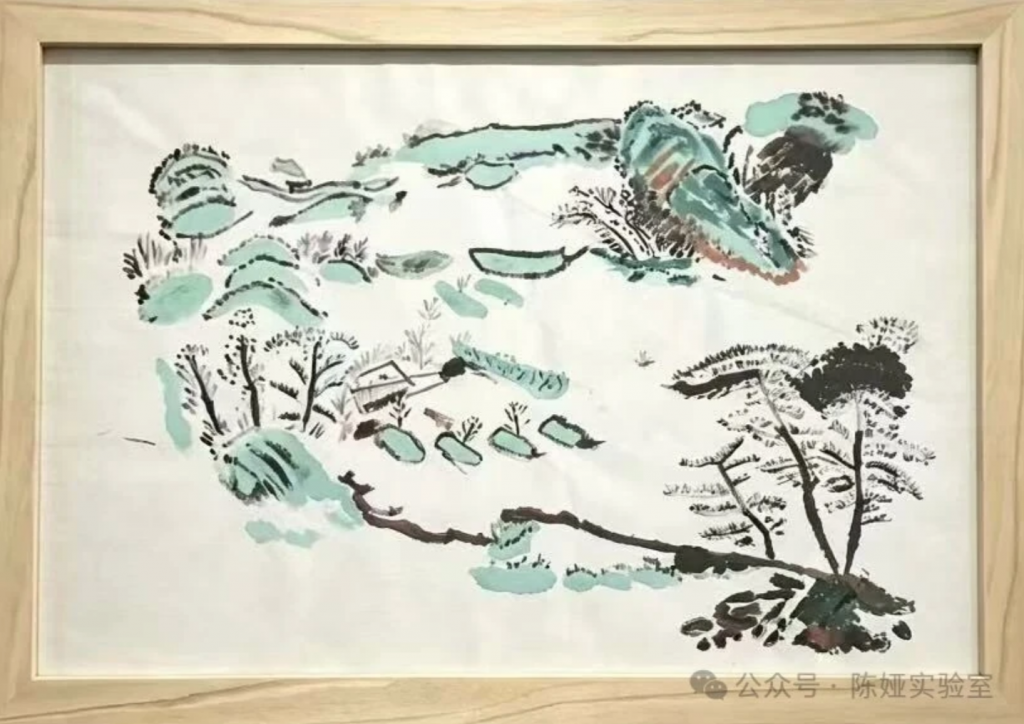
Last night, OpenAI’s mega funding round swept the headlines. This morning, Oracle laid off almost a fifth of its global workforce —a classic case of robbing Peter to pay Paul, funneling cash into an AI infrastructure money pit.
I thought of the Victoria water lily and the giant sequoia. Their grandeur is built on the death of other species.
The Victoria water lily’s leaves can grow up to three meters across, studded with spines on the underside. By blanketing the water’s surface, they block sunlight and suppress photosynthesis in other aquatic plants. Eerily similar to how dominant AI companies hoard capital and talent.
The giant sequoia, native to the U.S. West Coast, is the largest living organism on Earth. Its survival strategy:a deceptively shallow root system that spreads wide and sucks up every drop of surface moisture, leaving surrounding plants to wither.
If AI’s monopolistic logic proceeds unchecked, will the result be a handful of giants and little else?
OpenAI now pays top AI scientists millions — even tens of millions — a year. This “talent inflation” leaves other fields — drug discovery, materials science, traditional software engineering — struggling to keep up. Countless researchers once focused on niche problems are now being pulled into a single question: “How can we make LLM faster?”
The “Stargate” project, a partnership between OpenAI, Microsoft, and Oracle, plans to spend hundreds of billions on data centers. These hyperscale facilities consume as much electricity as a mid‑sized city. In an era of tight energy supply, this “power privilege” squeezes the quotas of traditional manufacturing and residential use.
The water lily and the sequoia aren’t evil by design — they follow their genetic programming, choosing the most efficient path to survival. The logic of AI giants is no different. In a winner‑takes‑all business model, growth itself becomes the goal. Biodiversity is just the cost.
When giants offer APIs at ultra‑low cost and keep lowering prices, startups trying to build smaller models or vertical applications lose their room to breathe. The open‑source community remains active, but against the sheer compute of closed‑source behemoths, it’s outmatched.
Huge numbers of software engineers, IT operations staff, and customer service agents are being replaced or pushed to the margins. The landscape begins to look like a forest stripped of undergrowth — nothing but towering trees.
AI‑generated content is rapidly crowding out original human creations online. Like the lily’s leaves covering a pond, the native plants beneath (human creativity) wither for lack of sunlight (traffic and attention). The internet is shifting from a tropical rainforest of human interaction into an artificial conifer forest of AI output.
In nature, despite their dominance, the lily and the sequoia are still part of the ecosystem. Sequoia bark is fire‑resistant; their mass stores carbon. The lily’s leaves shelter some fish. Similarly, AI brings productivity gains and faster science.
What truly deserves vigilance is the risk of monoculture. If an ecosystem has nothing but sequoias, a single pest — an AI security breach or an energy crisis — could bring down the whole system.
That concern is already generating counterforces. Regulators in the U.S. and Europe are watching the “iron triangle” of Microsoft, OpenAI, and Nvidia for monopolistic behavior. The market is also spinning off smaller, more energy‑efficient edge models — the shrubs and vines finding space in the giants’ shadows. Far‑sighted thinkers argue that the future of AI shouldn’t be a handful of sequoias, but a tropical rainforest of models of all sizes, functions, and ownership models.
But in a world of sequoias and water lilies — can a rainforest still grow?
Translated by DeepSeek
Edited by Wind
Photo by CY Lab
![[Recruiting 2011] Jointing.Media](http://jointings.org/eng/wp-content/themes/news-magazine-theme-640/cropper.php?src=/cn/wp-content/uploads/2012/06/123.png&h=50&w=50&zc=1&q=95)


